
Most people will agree there needs to be some level of planning before a project begins. But some may need convincing on spending thousands of dollars for what seems like a simple planning process.
A useful discovery process will go beyond standard timelines, budgets, and technology planning. In fact, a discovery is often needed to get to the root of the problem.
Discoveries separate “core issues” from “nice to haves”.
The planning phase of a project should include the definition of what needs to be done – from which everything else proceeds. However, we often find differing perspectives on the definition of “what needs to be done.”
Failing to fully understand desired outcomes can lead to unfavorable results. Scope creep could lead to budget and timeline overages. There’s a chance you’ll end up solving a problem that wasn’t the core issue.
Following a structured discovery process can ensure all of your bases are covered.
The Discovery Pyramid ensures a full-picture diagnosis.
At Atlantic BT, we like to describe our proven process in terms of the Discovery Pyramid. Each piece of this pyramid covers a crucial aspect of the total definition of the problem; skipping any one can negatively impact a project’s success.
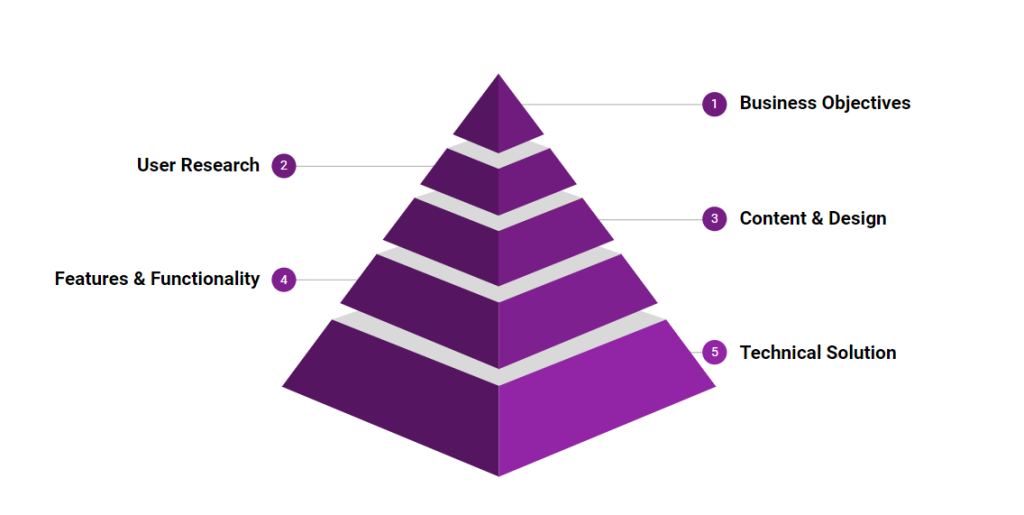
The key focus areas of the Discovery Pyramid are:
Business Objectives – Determine the high-level business need that must be addressed, in terms of impact on sales, operational efficiency, market share, etc. This step also includes key objectives and constraints. Understanding the true business objectives sets the context and north star for further decision-making.
Typical activities and deliverables include:
- Stakeholder interviews
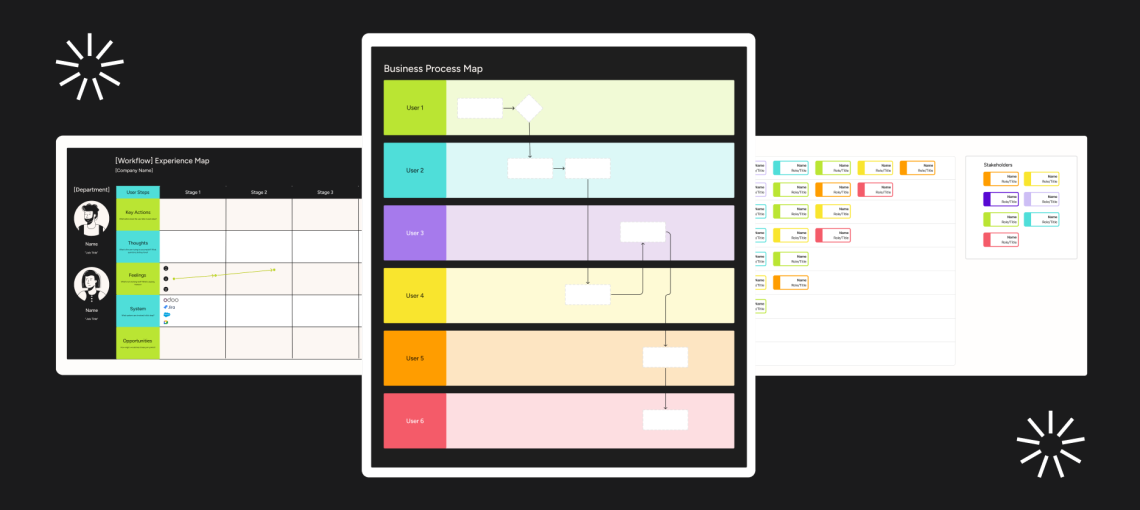
- Affinity Map (A visual representation of goals and feedback from interviews)
- Draft Requirements Matrix
User Research – These activities seek to understand your customer base, target audience, and/or key users, including their wants, needs, pain points and behavior patterns. Research is essential to providing a solution that truly meets user requirements, thus boosting customer satisfaction.
Typical activities include:
- User Interviews
- Persona workshop
- Review client user data / market research
- User workflows workshop
Resulting deliverables typically include:
- User Personas
- User Journey Map or Service Blueprint (for complex workflows)
Content & Design – An application is meant to deliver content and provide an interface for interaction with your firm. Content is the reason folks visit your site and content drives search engine results. Solid content and the design that delivers it go hand in hand. (“Design” meaning strategy, not visual mockups). Marketing sites focus heavily in this area and may require extra steps.
Typical activities include:
- Content Inventory
- Existing site structure analysis
- Analytics review
- Information architecture analysis
Resulting deliverables typically include:
- Information architecture (proposed)
- Site structure
- Page Description Diagrams
Features & Functionality – Define all the details about how an application will deliver content, enable action, and combine with the design to meet user needs and deliver an outstanding experience. Ecommerce sites and business applications focus heavily in the features and functionality area.
Typical activities include:
- Technical audit of current CMS/eCommerce platform
- Ecommerce features workshop (ecommerce only)
- Application features workshop (custom applications only)
Resulting deliverables typically include:
- Finalized Requirements Matrix
- Detailed Service Blueprint (custom applications only)
Technical Solution – The needs and constraints determined from the above activities inform the technical solution. We’ll also need to review the technical audit of the existing solution, assess any integrations, and review your in-house skills and support abilities. From there, we create recommendations of technology base, platform, and services that meet needs cost-effectively.
Typical activities include:
- System integration analysis
- Code / database review
Resulting deliverables typically include:
- Platform recommendation
- Proposed architecture diagram
What happens when you don’t follow the discovery process?
We are often approached by folks that describe their needs starting in the middle of the pyramid: “we need a site redesign” or “I need to build this functionality”. While we can certainly start there, more context in the surrounding areas provides a more effective solution, thus we always back up to cover previous sections of the pyramid.
For example, a website redesign in support of expanding market reach requires a focus on search engine optimization. If the same site redesign was driven by an aging back-end platform, it may require a more extensive technical assessment and data migration plan.
We’ve also seen instances of clients asking for a redesign, thinking they would need web design and information architecture help. It turns out, most of the design work was around rethinking interactions, which ends up being a software development project.
Discoveries should always precede solutions.
All of the discovery steps focus on the why and what questions, rather than the how. In UX terms, they lie in the problem space rather than the solution space; you have to fully understand the problem before you can come up with the best solution.
Try to keep an open mind when going into projects. You may feel you’ve already diagnosed the core issue and know exactly what work is needed, but a third party can help shed some much needed light on the problem at hand. This level of focus and understanding will set you up for success in the development phase.