
One of the biggest risks in custom software development is investing months of time and budget into building an application, only to realize at launch that the user experience feels clunky or a critical workflow was misunderstood. Traditional development models often rely on dense requirement documents and static wireframes; forcing stakeholders to imagine how the final product will actually behave.
Rapid prototyping eliminates that guesswork. By building a workable, interactive model of your software early in the Software Development Lifecycle (SDLC), your team can click through screens, test real user flows, and refine features before a single line of production code is written.
Here is how rapid prototyping saves mature businesses time, money, and frustration—and why AI has made it more effective than ever.
What Is a Workable Prototype?
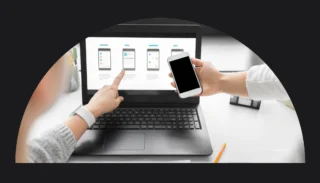
A prototype is far more than a flat design mockup or a slide deck of wireframes. Depending on the complexity of your project, a prototype can range from an interactive, clickable front-end simulation to a functional proof-of-concept connected to sample data.
The goal isn’t to build a finished product overnight; it is to **conceptualize design and functionality early** so everyone—from executive stakeholders to the daily end-users on your floor—can experience the software firsthand and provide concrete feedback while changes are still fast and inexpensive to make.
4 Key Benefits of Prototyping Before Full Development
- Catch Workflow Friction Early
When an established business builds custom software, the primary goal is streamlining existing operations rather than forcing employees to adapt to rigid tools. Putting a clickable prototype in front of the people who will actually use the software every day immediately exposes missing steps, confusing navigation, or edge cases that rarely show up in a requirements spreadsheet.
- De-Risk Your Budget and Timeline
Changes made during the design and prototyping phase cost a fraction of what they cost once backend architecture and database logic are already coded. Prototyping locks in clear, validated requirements early, preventing costly mid-project pivots and keeping full-scale builds predictable—typically within a 3-to-9-month window depending on complexity.
- Align Stakeholders Around a Tangible Vision
Technical specifications mean different things to different departments. Operations leaders, IT directors, and customer-facing teams often picture completely different outcomes until they see them on screen. A shared, interactive prototype creates instant alignment and speeds up internal sign-off.
- Validate Complex Features and AI Workflows
If your application includes advanced capabilities—such as automated reporting, custom dashboards, or intelligent data routing—prototyping lets you test the logic before committing to full infrastructure. For example, if you are planning a practical AI integration inside an existing CRM or ERP, a quick proof-of-concept prototype allows your team to evaluate output accuracy and user interaction patterns right away.
How AI Has Transformed Rapid Prototyping
Historically, building a high-fidelity prototype still required significant manual design and front-end coding hours. Today, AI-assisted development tools have fundamentally shifted how we kick off custom projects:
Prototype-First Discovery: Because AI tools allow designers and developers to generate interactive components and simulated data much faster, it is often more effective to start with a rough prototype and iterate on it live rather than spending weeks writing static documentation first.
Faster Iteration Cycles: Feedback gathered during a morning stakeholder review can often be modeled, tested, and presented in an updated prototype within days—compressing the early stages of the SDLC without sacrificing thoroughness.
Smoother Handoff to Production: Modern prototyping tools produce cleaner component structures and design systems, giving developers a stronger foundation when transitioning from validation into full-scale React or JavaScript development.
Where Prototyping Fits in Our SDLC
At Atlantic BT, prototyping isn’t an afterthought—it is a core bridge between initial research and full-scale engineering:
- Discovery & Research: We define your business goals, user needs, and system requirements.
- Design & Prototyping: We translate those requirements into mockups and workable, clickable prototypes so you can validate usability and functionality firsthand.
- Development & Automated QA: Once the prototype is approved, our developers build the production application using modern frameworks alongside AI-assisted testing to catch security, accessibility, and code issues early.
- Deployment & Ongoing Support: After launch, we provide continuous maintenance, security patches, and iterative updates so your software scales alongside your business.
Test Your Idea Before You Build It
You don’t have to commit to a massive, multi-month engineering build just to see if a software solution will work for your organization. Starting with a focused prototype gives you clarity, stakeholder buy-in, and a validated roadmap from day one.
Ready to turn a complex operational challenge into a working application? Explore our Custom Software Development Services to see how we take projects from early prototype to full-scale launch.