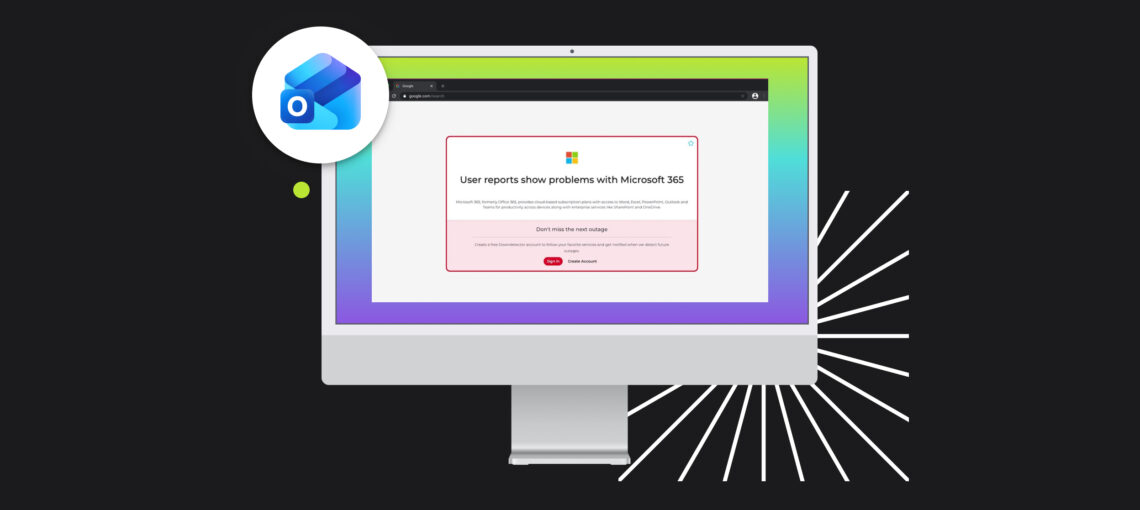

Last week, businesses, courts, and government agencies around the world got a stark reminder of just how reliant daily operations are on cloud infrastructure. Beginning on Thursday, November 12, a massive global Microsoft 365 outage knocked out access to Outlook, Exchange Online, Teams, and Copilot for millions of users across more than 70 countries. For nearly two days, inboxes froze, workflows stalled, and teams were forced to revert to phone calls and backup communication channels until full service was restored on November 14.
Microsoft has since confirmed that the blackout was not the result of a cyberattack. Instead, it was caused by a “perfect storm” of internal technical issues, specifically, a months-old software bug dating back to July 2026 that collided with server maintenance and a traffic allocation shift, overwhelming over 80% of Microsoft’s networking gateway servers.
Even though hackers weren’t behind last week’s downtime, major outages like the Microsoft 365 outage create the exact kind of chaos that cybercriminals love to exploit.
Why Outages Create Prime Conditions for Cyberattacks
When critical tools like Outlook go dark, organizational defenses naturally drop. Employees are frustrated, IT teams are stretched thin troubleshooting connectivity, and normal verification routines break down. Cybercriminals closely track major tech outages, using the chaos to launch targeted attacks both during and right after the disruption. These threats can include:
Opportunistic Phishing & Spoofing
Cybercriminals frequently send fake “Microsoft Service Restoration,” “Password Reset Required,” or “Quarantined Email Release” notices right as systems come back online. Eager to catch up on missed messages, employees are far more likely to click malicious links or enter credentials on spoofed login pages.
Shadow IT & Unsecured Workarounds
When official email and messaging platforms go down, staff often turn to personal email accounts, unapproved messaging apps, or unencrypted file-sharing tools to keep projects moving which can expose sensitive company data outside your security perimeter.
Business Email Compromise (BEC) & Impersonation
Scammers take advantage of communication backlogs by impersonating executives or vendors, claiming an urgent wire transfer or invoice approval was delayed by the outage and needs immediate action without
Vulnerability to Future Ransomware & DDoS Attacks
Last week’s outage proved that a single point of failure can halt productivity for days. If an accidental internal bug can cause that level of disruption, a deliberate ransomware attack or distributed denial-of-service (DDoS) campaign can be devastating without the right safeguards in place.
Building True Resilience with Atlantic BT
Waiting until a crisis hits, whether it’s a vendor outage or an active security breach, is a costly gamble. Staying vigilant requires proactive monitoring, airtight infrastructure, and a technology partner who understands how to protect your business from every angle.
At Atlantic BT, we help organizations move from reactive troubleshooting to proactive cyber resilience. With decades of experience in enterprise technology, cloud management, and security, our team strengthens your defenses before threats can exploit a weak link:
- Risk Management & Technical Governance: We assess your current digital footprint to identify hidden vulnerabilities, establish clear security policies, and ensure your infrastructure meets rigorous compliance standards (such as SOC 2).
- Continuous Cloud Monitoring & Maintenance: Cyber threats don’t take a break during off-hours or vendor disruptions. Atlantic BT provides ongoing infrastructure monitoring, patch management, and threat detection to catch suspicious activity before it escalates into full-blown downtime.
- Vulnerability Scanning & Threat Mitigation: Through regular vulnerability assessments and proactive security hardening, we close the gaps that attackers use to infiltrate networks, web applications, and cloud environments.
- Resilient Cloud Architecture & Continuity Planning: We design and manage secure, scalable cloud hosting solutions built for high availability, helping ensure your business has reliable backups, redundancy, and disaster recovery plans ready when unexpected disruptions strike.
Don’t Wait for the Next Disruption
Last week’s Microsoft 365 outage was a harmless, if frustrating, reminder of how fragile digital continuity can be. The next major disruption might not be an accidental bug. By keeping your team alert to post-outage phishing schemes and partnering with experts to fortify your infrastructure, you can keep your operations secure no matter what happens in the cloud.
Ready to evaluate your current security posture? Reach out to Atlantic BT today to discuss how our cybersecurity, risk management, and managed cloud services can protect your business around the clock.